
Orosz kőolajszállítási problémák: Szijjártó Péter a horvát kormányhoz fordult
Recent reports indicate that the Barátság kőolajvezeték, a crucial oil pipeline connecting Russia with Hungary and Slovakia, has experienced significant disruptions. A Russian airstrike at the end of January damaged the pipeline’s Ukrainian section, leading to the halting of oil deliveries to both countries. This situation has been confirmed by both Andrij Szibiha, the Ukrainian Foreign Minister, and Slovakia’s Ministry of Economy.
Szibiha shared images of the burning pipeline infrastructure following the January 27 attack to counter any allegations blaming Ukraine for the interruption in oil shipments. Slovakia further officially announced a cessation of oil deliveries from Ukraine. Reports from Erste Bank indicated a drastic reduction in deliveries, which fell from an average of 200,000 barrels per day to approximately 150,000 barrels.
According to anonymous sources familiar with the situation, Russia has not supplied any oil to Slovakia or Hungary as of February. Last month’s figures already showed a notable decline in the volume of oil arriving through the Barátság pipeline.
As tensions grow between Hungary and Ukraine, highlighted by the past statements from Hungarian Prime Minister labeling Ukraine as an enemy, the disruption of the pipeline due to Russian attacks on Ukrainian energy infrastructure has bred further complexities. The Hungarian oil and gas company, Mol, may need to redirect its annual import of 9-10 million tons of Russian oil through the Adria pipeline.
Currently, Mol’s oil reserves can only sustain operations for a few weeks, while both Hungary and Slovakia maintain a 90-day emergency stockpile of refined products and crude oil. Should Mol decide to switch from Russian oil to alternative sources, the refining capacity at their Danube and Bratislava refineries may drop to 70-80 percent temporarily, particularly since the Danube refinery is already operating at a reduced capacity following a fire incident last October.
Szijjártó Péter és a horvát szállítások biztosítása
Szijjártó Péter, Hungary’s Minister of Foreign Affairs and Trade, addressed these issues via his Facebook page, stating that Hungary and Slovakia previously secured the right to purchase affordable Russian oil through the Barátság pipeline. This exemption from sanctions allows for oil to be transported via maritime routes if pipeline shipments are obstructed.
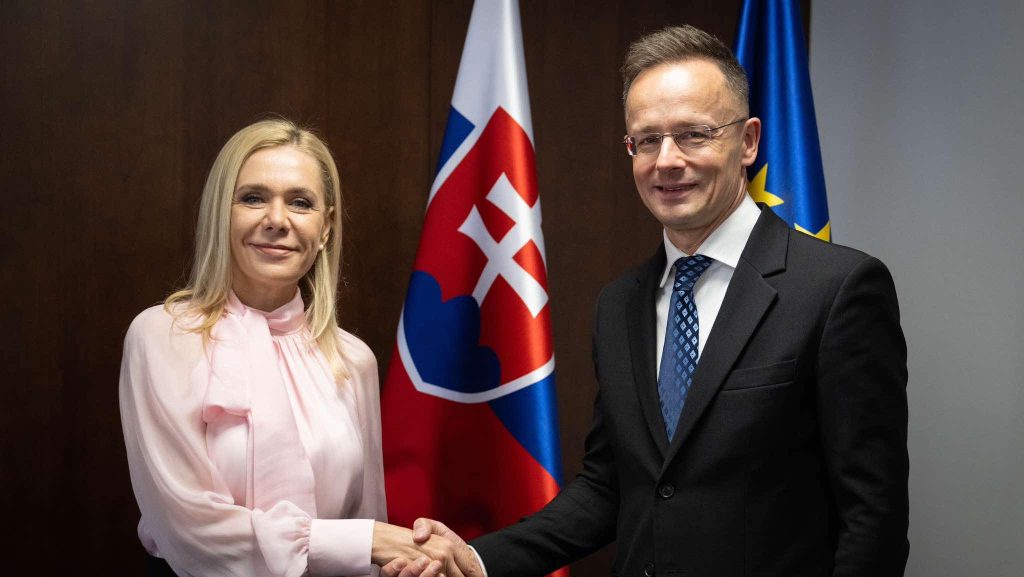
In response to the Ukrainian decision to maintain the suspension of oil shipments via the Barátság pipeline, Szijjártó, alongside Denisa Saková, Slovakia’s Minister of Economy, reached out to Ante Šušnjar, Croatia’s Minister of Economy. Their communication urged Croatia to facilitate the immediate transport of Russian oil to Hungary and Slovakia through the Adria pipeline in accordance with EU regulations.
Szijjártó emphasized that the energy security of Hungary must not become an ideological issue, insisting that Croatia should not jeopardize Hungary and Slovakia’s oil supply for political reasons, a dig at Ukraine’s stance.
Responding to Szijjártó’s comments, Ante Šušnjar announced on Monday that Croatia is willing to assist Hungary and Slovakia in their oil supply amid the disruption from the Barátság pipeline’s cessation.
Gazdasági kockázatok és a Mol tranzitdíjai
A recent study by the Center for the Study of Democracy (CSD), a Bulgarian public policy institute, highlighted that transit fees for non-Russian crude conveyed through the Adria pipeline are significantly lower than those for Russian oil transported via Ukraine, enhancing energy security due to the absence of conflict zones.
The CSD’s calculations suggest that the claims regarding excessive charges by the Croatian oil pipeline operator do not hold water. Instead, delivering non-Russian oil through Croatia results in transit costs that are nearly half of the fees imposed for Russian oil transported via Ukraine. According to Eurostat data, the transit premium for Russian oil may be approximately three times more than what Hungary pays for transit fees to Croatia.
